Pose
First hand starts with the double six. After that winners get to pose.
Partner dominoes is the classic Caribbean team game: four players, two teams, and a table full of quiet signals, hard reads, and pressure on every open end.


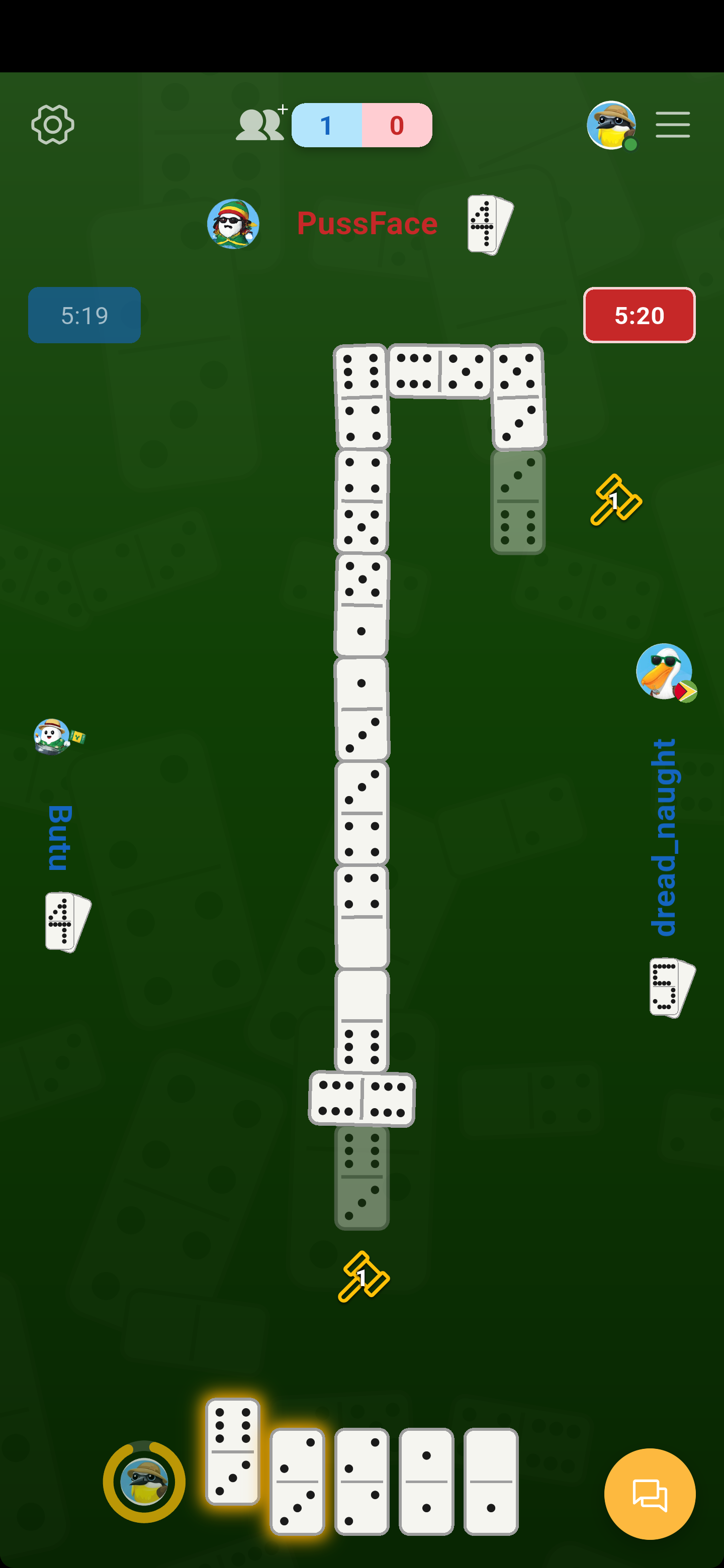
A quick starter version of the Jamaican Partner rules, focused on the four-player table flow.
Try to empty your hand first or help your partner empty their hand first.
First hand starts with the double six. After that winners get to pose.
The table is two teams of two. You play your own tiles, but every move should help your partner’s hand as much as your own.
After the first hand, the team that won the previous hand opens the next one. The winning pair may choose which teammate poses, but should not reveal specific tiles.
On each turn, play one tile to either end of the line. Matching numbers must touch, and doubles are traditionally placed across the line.
During play, partners should not tell each other what they hold or what they want played. The table is read through timing, choices, and what has already appeared.
The hand ends when any player plays their last tile, or when the layout is blocked and nobody can legally move.
Partner scoring rewards the team that wins the hand, with extra heat when a key bone closes the board.
If a player gets rid of every tile, that player’s team wins the hand and normally scores one point.
When the hand blocks, compare the individual players’ remaining pip totals. The team of the player with the lowest count wins, even if that player’s partner is holding more.
If one player from each team ties for the lowest count in a blocked hand, the hand is tied and neither team scores.
A number appears eight times in the set. When seven copies of a number are visible and that number is on an end, only one remaining tile can fit there.
If both ends are hard with different numbers, there may be only one legal tile left. Winning by playing that tile as your last tile can score two points instead of one.
The usual target is six points while the other team has none. If the other team wins a hand, the score resets to 0-0 and the next hand begins with double six.